How to execute CRO testing in six steps

Most visitors enter and leave your website without purchasing, signing up, or subscribing. Conversion rate optimization (CRO) testing is how you change that. It uses a data-driven approach to make informed decisions about what improves conversion rates and user experiences.
This article explains what CRO is and how to execute CRO testing using a modern experimentation framework.
What is CRO testing?
CRO testing uses controlled experiments to identify which changes improve how your website performs. Instead of guessing what visitors like, you present different experiences to your audience. The data then shows which variation converts better.
Many teams start with basic UX tweaks, but an actual experimentation culture goes further. It involves testing new user flows, complex feature releases, and algorithms to see what drives the highest impact.
If you want to set up a testing program, you need to understand the key testing methods available:
- A/B testing: You compare two versions of a webpage (Version A and Version B) to see which drives more conversions.
- Multivariate testing: You test multiple changes at once on the same page to see how different elements work together.
- Server-side testing: Instead of running the test in the user's browser, you make changes on your server. This approach lets you test deeper product changes, such as pricing algorithms or backend logic, without slowing down your website.
- Contextual bandits: These predictive UX algorithms direct traffic to the winning variation in real time, helping achieve results faster.
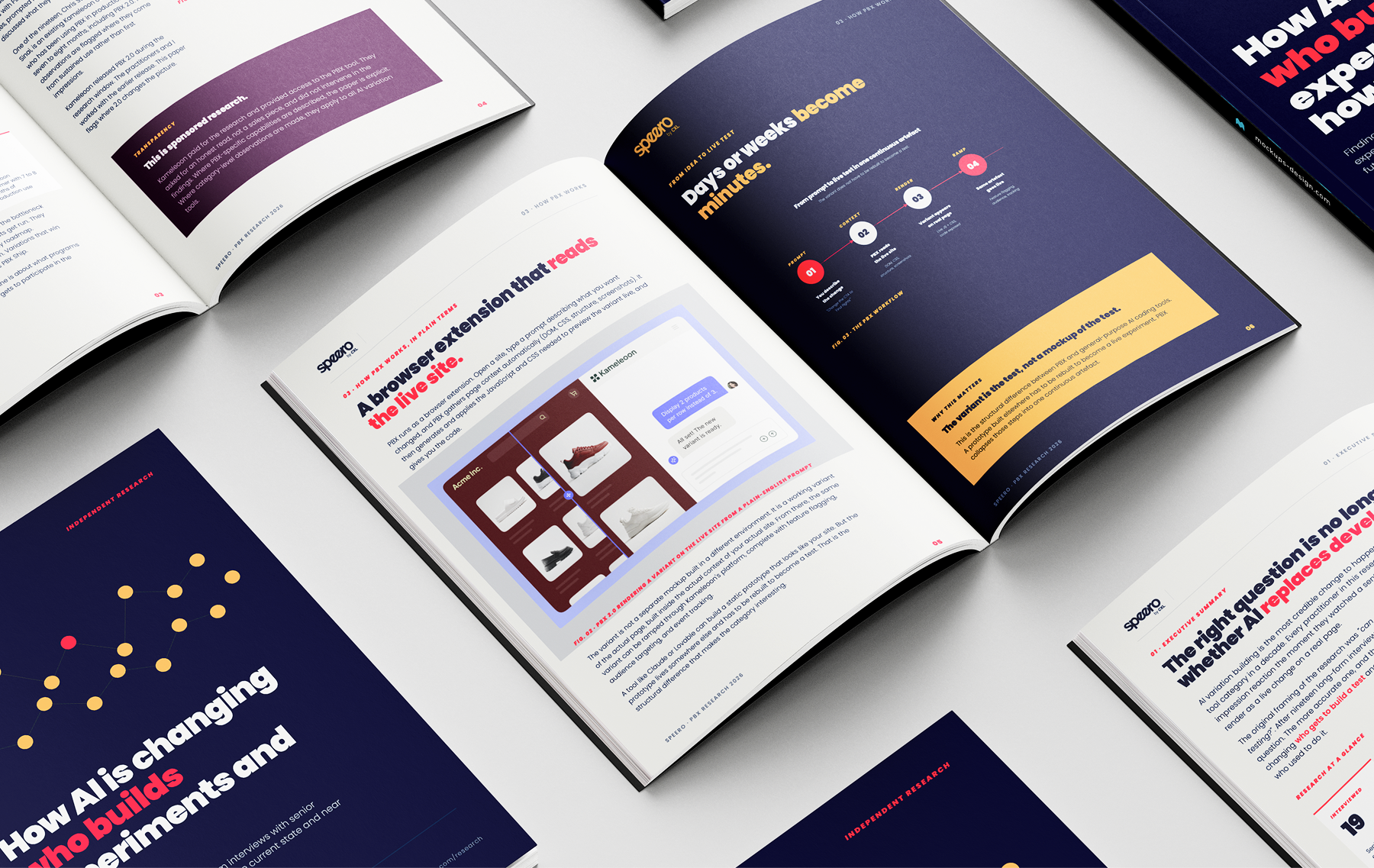
- Prompt-based experimentation: Teams can describe a test in plain language using generative AI within platforms like Kameleoon, which can automatically apply the test variations. This approach removes the technical barrier between a hypothesis and a live experiment.
Challenges of CRO testing
Teams running CRO tests face a complex digital environment with AI personalization, often-strict privacy rules, and fragmented customer experiences, often operating with pressure to deliver instant results (and wins).
These issues create technical and statistical challenges. To succeed with modern CRO testing, teams need to understand these challenges and plan their tests accordingly.
Hyper-segmentation and personalization
Personalization tools have the power to create very specific segments, but trying to customize experiences for too many groups can leave each group with few users. This fragmentation reduces statistical power and makes it hard to get reliable results. A/B tests need to be statistically significant to be acted on, which means small groups are rarely useful for testing.
Opaque AI models
When machine learning personalizes experiences, it can be like a “black box.” Teams may struggle to understand why a change helped some users but not others. This lack of transparency can make stakeholders hesitant to adopt new systems because they prefer clear, evidence-based reasons.
Real-time optimization conflicts
Tools that change pages or ads as people use them can make traditional A/B tests difficult. When the system keeps adjusting experiences in real time, it’s harder to accurately test and measure single changes. Did add-to cart increase because of the new flow we're testing, or is it because of a separate personalization on the same page?
Data privacy and tracking limits
New laws and restrictions in browsers make user data harder to collect. You can still conduct tests, but they usually depend on anonymous behavioral data rather than personal identifiers.
Attribution and complex journeys
Customers rarely convert on their first visit. Tracking a user across mobile devices, desktop browsers, and multiple sessions complicates your testing data.
If a user sees a new homepage design on their phone but completes the purchase later on their laptop, standard analytics tools might list that user as two different visitors. This tracking gap skews test results and makes it challenging to determine which version of the experiment led to the final purchase.
The three pillars of effective CRO testing
Successful CRO programs rest on people, processes, and technology working together.
People: the human foundation
Without the right skills and responsibility, experiments can easily go off track. It's easy to test the wrong problem, design weak hypotheses, or misread results, which leads to decisions based on incomplete or misleading data.
A good optimization program needs teamwork between marketing, product, analytics, and engineering teams. You should clearly assign ownership for each test and encourage a mindset of testing ideas across all departments.
Your team also needs to understand statistics and data interpretation well enough to know what the numbers actually mean. For example, stopping a test before it reaches statistical significance raises the risk of collecting data based more on random fluctuations than the test you're running. Often, this leads to incorrectly declaring a winner, and acting on faulty information.
Processes: turning data into decisions
Treat experimentation as an ongoing process rather than a one-time task.
- Build a systematic workflow: Use agile methods, plan tests in a roadmap, and review results in regular meetings.
- Embed testing into your culture: Define hypotheses from research, run tests, learn from them (even when a variation loses), and apply those insights to future tests.
Leaders should keep track of learnings in a shared place. Even negative or neutral outcomes feed back into strategy in well-run programs. Over time, this consistent cycle of planning, testing, and learning has a greater impact than random, untracked experiments.
Technology: enabling precision at scale
You should always position technology as an enabler because the right tech lets you run many reliable tests efficiently. Importantly, the right testing tools enable speed and scale and support both client-side (front-end) and server-side experiments.
Client-side tools are easy for quick user interface (UI) tweaks. But server-side testing is crucial when you need to test backend logic, application programming interfaces (APIs), or full product features.
For example, server-side experiments allow companies to test different versions of product recommendations or checkout flows that client-side scripts cannot reach.
{{blue-block-1}}
How to perform CRO testing
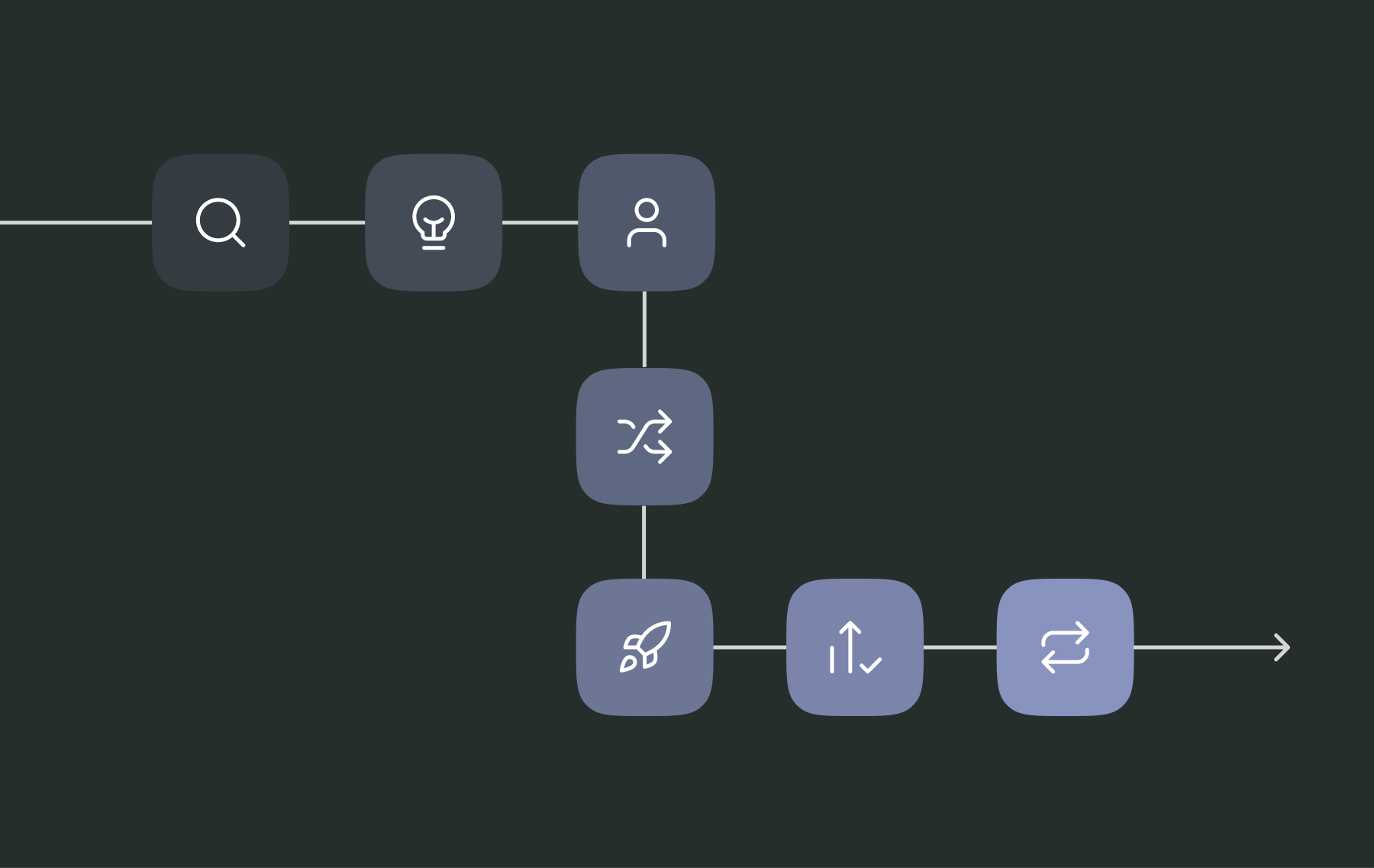
Executing modern CRO testing requires a structured, repeatable framework that guides teams from insight to measurable impact:
- Start by using analytics, heatmaps, or session recordings to find where users drop off or hesitate. From there, write a clear if‑then hypothesis grounded in real research. For example, “If we shorten the signup form, then more visitors will complete sign-up.”
- Once your hypothesis is defined, calculate the required sample size based on your baseline conversion rate and the minimum uplift you want to detect. Running tests on too little data leads to false conclusions.
- Next, choose the right test type for your goal. A classic A/B test works for most layout or content changes, while multivariate testing is better when you need to evaluate multiple elements at once. For time-sensitive campaigns, a bandit algorithm can detect and shift traffic to the winning variant in real time.
- Decide between client-side implementation for basic UI updates or server-side for complex backend logic and features. Develop your variants, perform QA across all devices, and deploy using targeting rules to distribute traffic evenly across your sample.
- Run tests until the planned sample size is reached to avoid the common mistake of stopping early. Validate results using statistical significance and monitor guardrail metrics, like page load time or average order value, to prevent trading conversion gains for hidden losses.
- Finally, document every outcome and feed those learnings back into your next hypothesis. A strong testing program is a continuous cycle, not a one-off event.
How Kameleoon helps operationalize modern CRO testing
Kameleoon combines web experiments, feature experiments, personalization, and AI-assisted workflows in a single system. Teams can run A/B tests and manage feature flag releases in one place, with server-side experiments measured alongside client-side analytics.
Prompt-based Experimentation enables teams to describe a test in plain language and launch it instantly. Additionally, AI Opportunity Detection automatically surfaces hidden winners by segment after a test concludes.
On the analytics side, built-in statistical tools help teams reach reliable results faster and protect against gains that hurt other KPIs. In particular, Kameleoon’s AI predictive targeting assigns each visitor a real-time conversion intent score, enabling personalized experiences without relying on third-party cookies. The platform runs on anonymized data to ensure privacy compliance and supports high-volume testing across users, traffic, and concurrent experiments.
Overcome your testing bottlenecks with modern testing practices
CRO requires aligning people, process, and technology. Random one-off tests or micro-optimizations are no longer enough. Instead, a modern, organized approach supported by artificial intelligence can grow and improve steadily and reliably.
The right experimentation platform, like Kameleoon, turns your CRO strategy into a unified system. Teams generate hypotheses, launch and measure tests, and immediately translate results into personalized improvements. This approach finds more wins faster and builds trust in the data (through built-in guardrails and analytics).
Organizations that combine optimized testing with search engine optimization (SEO) and customer experience achieve better results compared to those that work in isolation.
{{cta-block}}
FAQs
A/B testing should not be used for making major design or strategy changes without prior research. This testing method is best suited for testing small, incremental changes. Additionally, before testing you should always make sure you have sufficient traffic to gather reliable results.
A/B testing is used by a wide range of professionals, including marketers, web developers, product managers, product developers, and healthcare providers, and industries, including large ecommerce companies or banks, for example. Anyone looking to optimize their digital content, improve user experience, or make data-driven decisions can benefit from this type of experimentation.
It all comes down to the technical skill levels of your experimentation team members. So first, poll team members to determine their front and back-end development skills. Then, think about the test complexity and test volume you want to produce.Just some of the essential features of an A/B testing platform you’ll want to look to include:Graphical editor for codeless test-buildingCustomizable user segmentation toolsBuilt-in widget librarySimulation tool to evaluate test parametersComparative analysis toolsReport sharingDecision support systems Do you have the skills available to carry out all of those tests? The higher the volume and greater the complexity of tests you want to conduct, the more likely you will benefit from using a testing solution like Kameleoon Hybrid.
A/B testing and split testing are often used interchangeably, but they can have slightly different meanings.A/B testing typically involves comparing two versions (A and B) of a single element to see which one performs better. Split testing, on the other hand, can involve comparing multiple versions of multiple elements at once. So, while all A/B tests are split tests, not all split tests are A/B tests.
Usability testing focuses on how real users interact with a product to identify any issues or areas for improvement. The objective of this testing method is to understand user behavior and get qualitative feedback.A/B testing, on the other hand, compares two versions of a product, product feature, or web page to see which one performs better based on quantitative data, like conversion rates or click-through rates. In short, usability testing helps make a product easier to use, while A/B testing helps optimize its performance.
A/B testing is a type of controlled experiment; with A/B testing, you create two (or more) versions of a variable and randomly assign users to each version to control external factors. This way, any differences in outcomes can be attributed to the changes you made, making it a controlled and reliable method for testing.
A/B testing is a specific type of hypothesis testing where you compare two versions of something to see which one performs better. Hypothesis testing is a broader concept used in statistics to determine if there is enough evidence to support a specific hypothesis.For example, your hypothesis might be that version B of a webpage will get more clicks than version A. You then run the test to see if the data supports this hypothesis. You can learn more about the differences between A/B testing and hypothesis testing here.
A/B testing is quantitative. The experimentation method involves comparing numerical data from two versions of click-through rates or conversion rates, to see which one performs better. This method uses statistics to enable data-backed decisions
People use A/B testing to compare two versions of a webpage, app feature, or other marketing materials to see which one performs better. This experimentation method helps businesses make data-driven decisions by showing them which version leads to higher engagement, conversions, or other desired outcomes.For example, in healthcare marketing, A/B testing can help determine which call-to-action (CTA) copy gets more patients to book an appointment online, ultimately improving communication and patient engagement. By testing different elements and analyzing the results, organizations can optimize their strategies to better meet their goals.
A/B testing is an incredibly versatile method for generating insights. It can be valuable to many teams, including marketing, product, and growth teams. Marketing teams can construct A/B tests to reveal which campaigns lead customers down their funnel effectively. Product teams can test user retention and engagement. Growth teams can easily use them to evaluate different components of their customer journey.
A/B testing can be as simple or as complex as you want. For example, you can conduct simple version tests where you compare the effectiveness of a new B version against an original A version. You can also conduct multivariate tests (MVT) where you compare the effectiveness of different combinations of changes. You could also test three or more variations simultaneously, called A/B/n testing. If you can change your codebase that modifies your user experience, there is a way to test it.
An A/B test presents multiple versions of a webpage or an app to users to determine which version leads to more positive outcomes. This is a relatively easy way to improve user engagement, offer more engaging content, reduce bounce rates, and improve conversion rates.Every time you conduct an A/B test, you learn more about how your customers engage with your site or app. Over time, a comprehensive testing program creates a feedback loop making your content more and more effective and providing a foundation for new, even more insightful tests.
Usually, you’re testing two versions: your original version, the A version—also called the control—against the modified B version you hypothesize will perform better. Before building your A/B test, you decide what metrics to measure so you can quantify what “better” means in your test results.

Alternative Airlines, an online travel distributor, uses Kameleoon to experiment with its complex single-page application (SPA).
Before Kameleoon, the team struggled with flicker and unreliable variations.
After adoption, a small team can run up to 20 experiments in parallel. They test localized landing pages and booking-journey variations, without performance issues or technical burden.
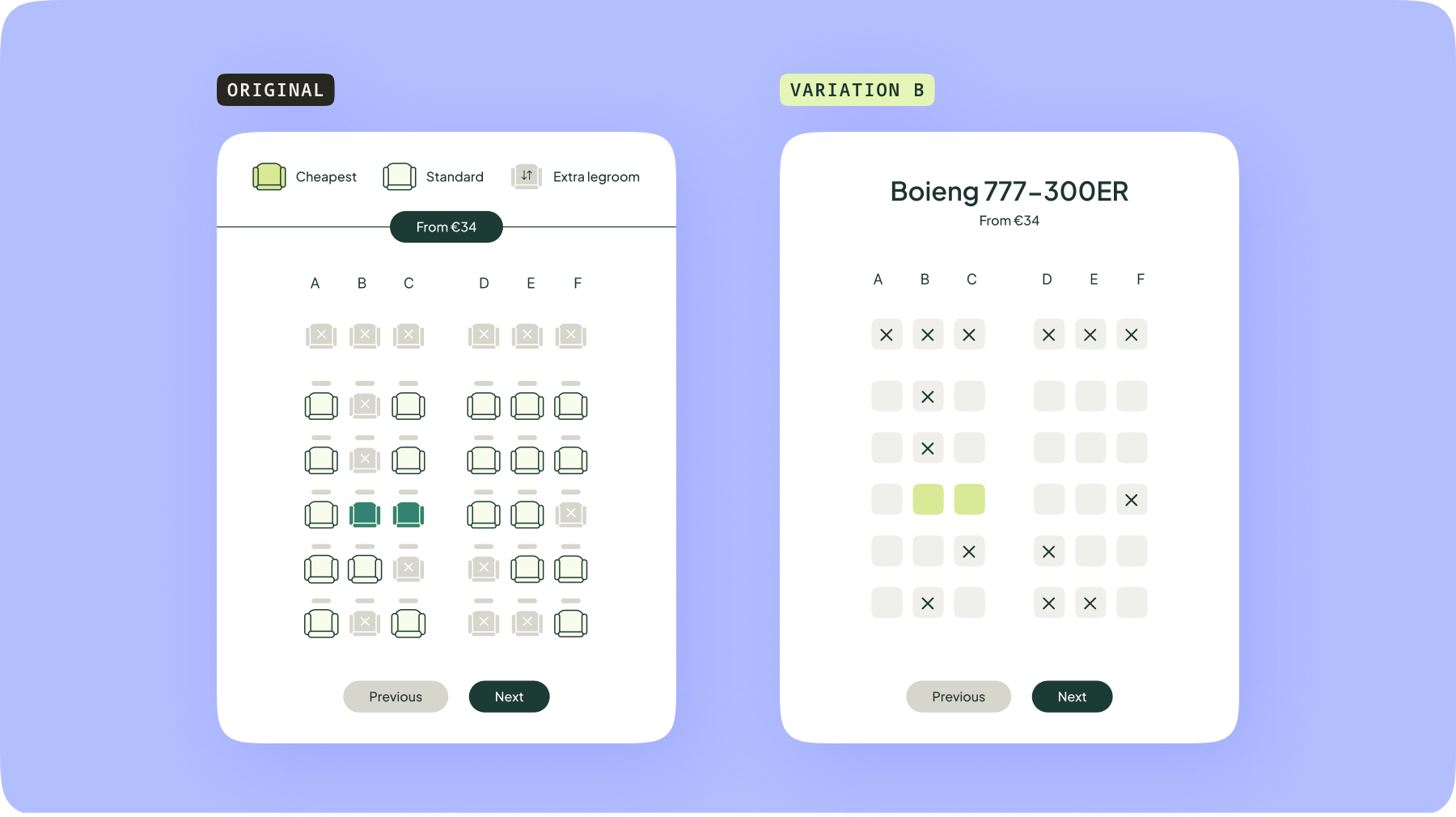
A simple copy test of a call-to-action (CTA) produced a +34% increase in purchases. Region-specific tweaks, such as switching to a 12-hour clock format for U.S. visitors, delivered a 7% boost in bookings.
Localized trust signals ontributed an additional ~5% uplift in conversions across markets, all while maintaining a fast and easy booking experience for users.
Ready to run better CRO tests? Book a demo to see how Kameleoon helps teams test, learn, and grow conversions.
Ready to run better CRO tests? Book a demo to see how Kameleoon helps teams test, learn, and grow conversions.